
As spring and summer temperatures rise in Georgia, homeowners often notice more flying insects around their properties. While a buzzing insect near your porch may seem harmless at first, it could be a sign that a nest has been established nearby. One of the most common questions homeowners ask is whether they’re dealing with bees, wasps, or hornets.
Although these insects share some similarities, they have distinct behaviors, nesting habits, and risks. Knowing the difference can help you make informed decisions about protecting your family, pets, and property. In this guide, we’ll explain how to identify bees, wasps, and hornets, discuss the dangers associated with stinging insect nests, and explore why professional removal is often the safest solution.
Understanding the Difference Between Bees, Wasps, and Hornets
At first glance, bees, wasps, and hornets can look similar. However, each plays a different role in the environment and requires a different approach when control becomes necessary.
Bees
Bees are among the most beneficial insects in the ecosystem. They play a critical role in pollinating flowers, fruits, vegetables, and many agricultural crops. Without bees, many plants would struggle to reproduce.
Common characteristics of bees include:
- Fuzzy or hairy bodies
- Rounded appearance
- Primarily feed on nectar and pollen
- Less aggressive than wasps and hornets
In Georgia, homeowners commonly encounter honey bees, bumble bees, and carpenter bees. Honey bees typically live in colonies, while carpenter bees often bore into wooden structures to create nesting tunnels.
While bees are generally not aggressive, they will defend their colony if they feel threatened. This is why any form of bee control should be approached carefully and responsibly.
Wasps
Wasps have a much different reputation. Unlike bees, wasps are predators that help control populations of other insects. However, they are also more aggressive and territorial.
Characteristics of wasps include:
- Smooth, shiny bodies
- Narrow waist between body sections
- Bright yellow and black coloring
- Ability to sting multiple times
Common wasps found around Georgia homes include paper wasps, yellowjackets, and mud daubers.
Wasps frequently build nests under eaves, decks, porches, railings, sheds, and other sheltered areas around the home. While some species are relatively docile, others become highly defensive when their nest is disturbed.
Hornets
Hornets are actually a type of wasp, but they are generally larger and more aggressive than other wasp species.
Hornets often build large paper-like nests in:
- Trees
- Shrubs
- Roof overhangs
- Exterior structures
Bald-faced hornets and European hornets are among the species commonly found in Georgia. Because hornet colonies can grow quite large, encounters with these insects can become dangerous if a nest is located near areas of human activity.
This is one reason professional hornet control in Georgia is often recommended when homeowners discover an active nest.
How to Identify a Nest Around Your Home
Identifying the type of nest can provide valuable clues about the insect species you’re dealing with.
Bee Nests
Honey bee colonies often establish themselves inside:
- Hollow trees
- Wall voids
- Chimneys
- Attics
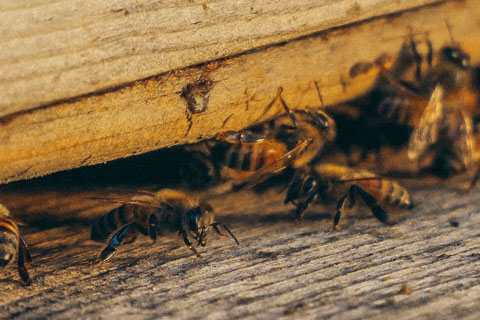
You may notice a steady stream of bees entering and exiting a single opening.
Carpenter bees, on the other hand, do not build traditional nests. Instead, they drill perfectly round holes into wood surfaces such as decks, fences, and siding.
Wasp Nests
Paper wasps create distinctive umbrella-shaped nests that hang from horizontal surfaces. These nests are commonly found under rooflines and porch ceilings.
Yellowjackets often nest underground or inside wall voids, making them more difficult to locate. Homeowners may only notice increased wasp activity near a hidden entrance.
Hornet Nests
Hornets build large, enclosed nests that resemble gray paper footballs. These nests are often suspended from trees or attached to structures.
Because hornet colonies can contain hundreds of insects, even approaching a nest can trigger aggressive defensive behavior.
The Risks of Stinging Insects Around Your Property
Finding a nest near your home is more than just an inconvenience. Stinging insects can pose significant health and safety risks.
Painful Stings
While bees typically sting only when threatened, wasps and hornets can be much more aggressive.
Unlike bees, which usually die after stinging, wasps and hornets can sting repeatedly. This can make encounters particularly painful and dangerous.
A disturbed nest may result in multiple insects attacking at once, increasing the likelihood of numerous stings.
Allergic Reactions
For some individuals, even a single sting can lead to a severe allergic reaction.
Symptoms may include:
- Difficulty breathing
- Swelling beyond the sting site
- Dizziness
- Rapid heartbeat
- Anaphylaxis
These reactions can quickly become life-threatening and require immediate medical attention.
Risks to Children and Pets
Children and pets are especially vulnerable because they may unknowingly disturb a nest while playing outdoors.
A hidden yellowjacket nest in the yard or a hornet nest hanging from a tree can quickly turn an enjoyable afternoon into a dangerous situation.
Property Damage
Certain stinging insects can also damage your home.
Carpenter bees are well-known for tunneling into wood. Over time, repeated nesting activity can contribute to structural deterioration.
Additionally, large colonies hidden inside wall voids may create problems if left untreated. Once abandoned, nests can attract other pests and create ongoing maintenance concerns.
Why DIY Nest Removal Is Dangerous
When homeowners discover a nest, their first instinct is often to remove it themselves. Unfortunately, this approach can create more problems than it solves.
Disturbing a Nest Can Trigger Aggression
Stinging insects are highly protective of their colonies. Even minor disturbances can cause hundreds of insects to respond defensively.
Many DIY removal attempts result in multiple stings and emergency room visits each year.
Store-Bought Products Often Fall Short
While hardware stores sell various sprays and treatments, these products may not eliminate the entire colony.
Common issues include:
- Incomplete treatment
- Hidden nests remaining active
- Repeated infestations
- Increased aggression during application
Without identifying the nest location and species correctly, DIY treatments often provide only temporary relief.
Safety Hazards
Many nests are located in difficult-to-reach areas such as rooflines, attics, or tall trees.
Attempting removal can expose homeowners to:
- Falls from ladders
- Multiple stings
- Exposure to pesticides
- Injury from improper equipment use
Professional technicians have the protective gear, training, and specialized products needed to handle stinging insect problems safely.
Safe and Humane Bee Control Options
Not every bee problem requires extermination. In fact, many bee species are valuable pollinators that should be protected whenever possible.
Professional bee control in McDonough GA often focuses on humane solutions that prioritize both safety and environmental responsibility.
Bee Relocation
When honey bee colonies establish themselves in problematic locations, relocation may be an option.
Professional pest control specialists can evaluate the situation and determine whether the colony can be safely removed and relocated rather than eliminated.
This approach helps preserve important pollinator populations while resolving the homeowner’s concerns.
When Bee Control Is Necessary
There are situations where intervention becomes necessary, including:
- Colonies inside walls or attics
- Nests near entryways
- High-traffic outdoor areas
- Properties with residents who have severe allergies
A professional assessment can help determine the safest course of action.
Professional Wasp and Hornet Control Solutions
Wasps and hornets generally require a more direct control approach due to their aggressive nature and the risks they pose.
Thorough Inspection
The first step in professional stinging insect control is identifying:
- The species involved
- Nest locations
- Colony size
- Potential risk factors
This allows technicians to develop an effective treatment plan.
Safe Wasp Nest Removal
Professional wasp nest removal provides several important advantages:
- Reduced risk of stings
- Proper protective equipment
- Effective treatment methods
- Complete colony elimination
By targeting both visible and hidden nests, professionals can help prevent recurring infestations.
Hornet Control for Georgia Homes
Because hornets are particularly aggressive, professional hornet control in Georgia is strongly recommended whenever a nest is discovered.
Trained technicians can safely remove active nests while minimizing risks to residents, pets, and neighboring properties.
Preventing Future Stinging Insect Problems
While no property is completely immune to stinging insects, homeowners can take steps to reduce the likelihood of future infestations.
Remove Food Sources
Wasps and hornets are attracted to food and sugary substances.
Helpful prevention measures include:
- Keeping trash cans sealed
- Cleaning outdoor dining areas
- Covering food during gatherings
- Removing fallen fruit from yards
Eliminate Nesting Opportunities
Inspect your property regularly and address potential nesting locations.
This may include:
- Repairing damaged siding
- Sealing cracks and gaps
- Maintaining sheds and outbuildings
- Treating exposed wood surfaces
Schedule Routine Pest Inspections
Regular inspections allow pest professionals to identify nesting activity before colonies become established.
Early detection often results in safer, easier, and more affordable treatment.
Trust Providence Pest Control for Stinging Insect Control
Whether you’re dealing with buzzing bees around your deck, an active wasp nest under your eaves, or an aggressive hornet colony near your home, professional help can provide peace of mind.
At Providence Pest Control, we understand the unique challenges Georgia homeowners face when it comes to stinging insects. Our experienced team provides thorough inspections, safe treatment methods, and customized solutions designed to protect your family and property.
From humane bee control in McDonough GA to expert wasp nest removal and reliable hornet control in Georgia, we’re committed to delivering effective results while prioritizing safety.
Schedule Your Inspection Today
If you’ve noticed increased stinging insect activity around your home, don’t wait for the problem to worsen. Contact Providence Pest Control today to learn more about our professional stinging insect control services and schedule an inspection.

Greg Sweat is the founder of Providence Pest Control, a family-owned business built on a lifelong passion for solving pest problems and serving the local community. His career in the “bug business” began in 1996 after transitioning from long hours in retail management into the pest control industry, where he discovered work that truly matched his interests and goals.
Starting out on a service route, Greg quickly found motivation in helping customers solve real problems and took pride in becoming highly skilled in the field. Over the next two decades, he worked through every level of the pest control industry, eventually serving in executive leadership roles within a large corporation. While he achieved many professional milestones, Greg felt called to pursue entrepreneurship and return to a more personal, community-focused approach to service.
That vision led to the creation of Providence Pest Control as a family-operated business dedicated to providing reliable, customer-centered pest control solutions. Today, Greg works alongside his wife Jan and their children Emily and Gregory, who contribute to the business in roles ranging from bookkeeping and customer follow-up to field support.
Greg remains passionate about combining technical expertise with genuine customer care, helping families keep their homes safe, comfortable, and pest-free.
In this blog, Greg shares insights and offers expert guidance on pest prevention, treatment options, and maintaining a safe, comfortable home environment.