
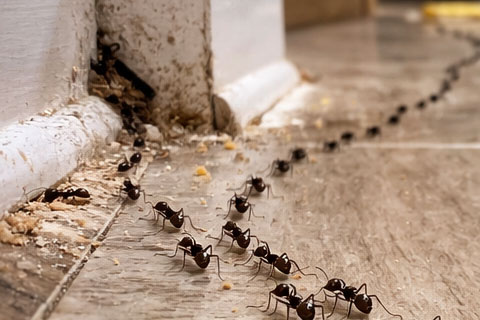
You’d think once temperatures drop, pests would disappear. But if you live in McDonough or anywhere in central Georgia, you may have discovered that ants don’t exactly follow that rule. Just when you assume “ant season” is over, you spot them again, lining your baseboards, trailing across your kitchen counter, or gathering near the sink.
So what gives?
The truth is, Georgia’s climate allows many ant species to remain active year-round. And when outdoor conditions become less comfortable, your home becomes the perfect refuge. Understanding why ants invade Georgia homes, even in winter, can help you prevent ongoing problems and know when it’s time to seek professional ant control.
Let’s take a closer look at what’s happening behind the scenes.
Common Ant Species Found in Georgia Homes
Not all ants behave the same way. Georgia is home to several species that frequently invade residential properties, and each has its own habits and preferences.
Argentine Ants
Argentine ants are among the most persistent household invaders in Georgia. These ants form extremely large colonies sometimes made up of multiple interconnected nests. Instead of one queen, they often have many, which makes them especially difficult to eliminate without professional treatment.
They’re strongly attracted to sweet foods and moisture. Once they find a food source inside your home, they establish scent trails that guide thousands of other ants directly to it.
Odorous House Ants
These small brown or black ants are commonly found indoors. When crushed, they emit a distinct odor, which is how they got their name.
Odorous house ants often nest outdoors under mulch, rocks, or debris. But when temperatures drop or heavy rain disrupts their nests, they move indoors seeking warmth and protection. Kitchens and bathrooms are frequent targets due to available food and water.
Fire Ants
While typically known for their outdoor mounds, fire ants can become indoor pests under certain conditions. During periods of cold weather or excessive rain, they may relocate to sheltered areas such as garages, wall voids, or beneath foundations.
Georgia’s mild winters mean these ants rarely become fully dormant, increasing the likelihood of winter activity.
Why Ants Enter Homes During the Winter
Many homeowners assume insects “die off” in cold weather. In reality, ants are incredibly adaptable.
Here’s why they continue invading homes, even in winter.
1. Your Home Provides Stable Warmth
When outside temperatures fluctuate, ants look for consistent shelter. Inside walls, crawl spaces, and slab foundations provide insulation and warmth that outdoor environments lack.
Even if it feels cold to you, interior structural spaces remain warm enough to sustain a colony.
2. Outdoor Food Sources Become Scarce
During colder months, natural food supplies decline. Fewer plant secretions, insects, and organic debris mean ants must expand their search for nourishment.
Indoors, food is abundant and reliable:
- Crumbs beneath appliances
- Pantry goods not fully sealed
- Pet food bowls
- Sticky spills
- Garbage containers
It doesn’t take much – tiny particles are enough to support a large population.
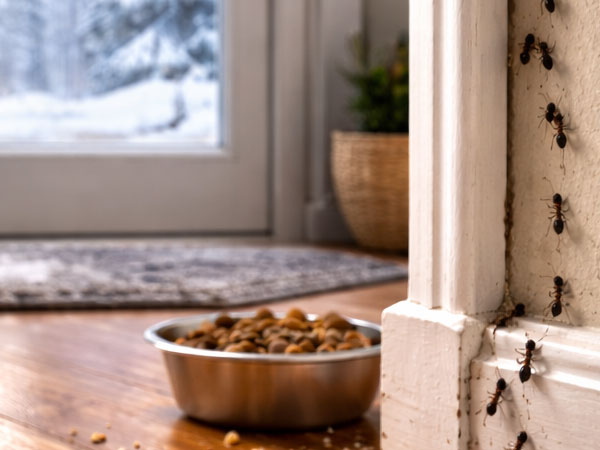
3. Moisture Draws Them In
Ants need water just as much as they need food. Winter can reduce accessible outdoor moisture, making sinks, condensation, leaky pipes, and bathrooms especially attractive.
If ants appear near your dishwasher, under your sink, or around plumbing areas, moisture may be the primary attractant.
4. Colonies May Already Be Established Indoors
In some cases, ants invading during winter aren’t “coming in” from outside at all, they’re already living inside your walls or beneath your flooring.
You’re simply seeing worker ants emerge to forage.
This is one reason winter ant problems often feel sudden and persistent.
Why Store-Bought Sprays Rarely Work
It’s completely understandable: you see ants, you grab a spray. For a day or two, it looks like the problem is solved.
But then they’re back.
Here’s why.
Surface Sprays Only Kill What You See
The ants marching across your counter represent a small fraction of the colony. The queen, eggs, larvae, and majority of workers remain hidden inside walls, beneath slabs, or outdoors near your foundation.
As long as the queen survives, the colony continues reproducing.
Some Species Multiply When Disturbed
Certain ants, particularly Argentine ants, can respond to chemical disruption by splitting into multiple colonies. This process, sometimes referred to as budding, can actually increase the size and spread of the infestation.
Instead of one problem, you may unintentionally create several.
Repellents Redirect, Not Eliminate
Many over-the-counter treatments act as repellents. They break up a visible trail, but ants simply create a new one elsewhere. That’s why activity often reappears in another room.
True ant infestation treatment requires targeting the source and not just the visible workers.
How Professional Ant Control Targets the Source
Professional ant control approaches the problem strategically and thoroughly.
Accurate Species Identification
Different species require different treatment methods. A professional inspection ensures the correct approach is used from the start, preventing wasted time and ineffective products.
Nest and Entry Point Location
Ants can enter through gaps as small as a fraction of an inch. Technicians inspect:
- Foundation cracks
- Door and window frames
- Utility line openings
- Landscaping near the structure
- Crawl spaces and attics
Finding where ants are nesting and how they’re entering is key to long-term success.
Targeted Baiting Strategies
Professional-grade bait systems are designed to be carried back to the colony. Worker ants transport the bait to the nest, sharing it with the queen and developing ants.
This method eliminates the colony from within rather than scattering it.
Exterior Perimeter Protection
Creating a treated barrier around the home reduces future invasions. This is especially important in Georgia, where ants remain active most of the year.
Ongoing professional ant control can dramatically reduce the risk of repeat infestations.
Why Ant Problems Often Return Without Ongoing Treatment
Georgia’s climate is one of the biggest factors in recurring infestations. In areas like McDonough, winters are generally mild enough that ants remain active beneath the soil and around foundations.
Even if one colony is eliminated, nearby colonies can move in.
Without comprehensive ant control McDonough GA homeowners may experience:
- Seasonal reinfestations
- Increased winter activity
- Expanding colonies around foundations
- Recurring interior sightings
Preventative service is often more effective and more affordable than repeated DIY attempts.
Signs You Need Professional Ant Infestation Treatment
You may want to contact a professional if:
- Ants reappear after spraying
- You notice activity in multiple rooms
- Ants are visible in winter months
- You see ants emerging from walls or electrical outlets
- Trails return within days of cleaning
Persistent activity usually indicates a hidden colony nearby.
Professional Ant Control in McDonough, GA
Ants invading your home in winter isn’t unusual in Georgia but it’s not something you have to tolerate.
Effective professional ant control focuses on eliminating the colony at its source, sealing entry points, and preventing future invasions. At Providence Pest Control, treatment strategies are tailored to the species and severity of the infestation, ensuring long-term results rather than temporary relief.
If you’re searching for reliable ant control McDonough GA homeowners trust, don’t wait for a small problem to become a widespread infestation. Comprehensive ant infestation treatment can protect your home in every season, even winter.
Contact Providence Pest Control today to schedule an inspection and regain peace of mind with expert, year-round professional ant control.

Greg Sweat is the founder of Providence Pest Control, a family-owned business built on a lifelong passion for solving pest problems and serving the local community. His career in the “bug business” began in 1996 after transitioning from long hours in retail management into the pest control industry, where he discovered work that truly matched his interests and goals.
Starting out on a service route, Greg quickly found motivation in helping customers solve real problems and took pride in becoming highly skilled in the field. Over the next two decades, he worked through every level of the pest control industry, eventually serving in executive leadership roles within a large corporation. While he achieved many professional milestones, Greg felt called to pursue entrepreneurship and return to a more personal, community-focused approach to service.
That vision led to the creation of Providence Pest Control as a family-operated business dedicated to providing reliable, customer-centered pest control solutions. Today, Greg works alongside his wife Jan and their children Emily and Gregory, who contribute to the business in roles ranging from bookkeeping and customer follow-up to field support.
Greg remains passionate about combining technical expertise with genuine customer care, helping families keep their homes safe, comfortable, and pest-free.
In this blog, Greg shares insights and offers expert guidance on pest prevention, treatment options, and maintaining a safe, comfortable home environment.